How Temperature Regulating Comforters Reduce Tossing and Turning for Restful Sleep
Roger Yin
Sleep disrupted by sudden temperature shifts is a common cause of restless nights, and temperature-regulating comforters offer a practical solution by stabilizing the microclimate next to your skin to reduce tossing and turning. This article explains how thermoregulation during sleep works, the mechanisms behind cooling comforters, and the materials and design choices that make a measurable difference for hot or restless sleepers. You will learn why micro-awakenings occur from overheating or chilling, how technologies such as phase change materials and moisture-wicking fibers operate, and how to match a comforter to your sleep profile and bedroom conditions. The guide covers causes of nocturnal movement, an accessible summary of thermoregulation biology, comparative EAV tables of regulation technologies and materials, and a step-by-step buying checklist for selecting the best comforter for hot sleepers or mixed-sleep couples. Practical lists and comparison tables are included so you can quickly identify the features that reduce night sweats, maintain optimal sleep temperature, and promote longer uninterrupted sleep periods.
Why Do We Toss and Turn During Sleep?
Temperature-related discomfort is one of the leading triggers of tossing and turning because the body relies on a narrow thermal window to maintain sleep continuity and transitions between sleep stages. When the skin or bedroom microclimate becomes too warm or too cold relative to that window, thermoregulatory responses (sweating, vasodilation, shivering) create micro-arousals and behavioral adjustments such as repositioning or kicking off bedding. Other factors like pain, anxiety, and untreated sleep disorders also increase movement, but thermal discomfort is uniquely pervasive because it directly interrupts the neural mechanisms that stabilize deep and REM sleep. Recent studies and sleep-science reviews indicate that even small deviations in skin temperature can shorten deep-sleep periods and increase perceived restlessness.
What Causes Restless Sleep and Frequent Movement?
Restless sleep and frequent movement arise from a combination of physiological, environmental, and psychological triggers that fragment sleep architecture and reduce restorative stages. Thermal discomfort—either overheating from trapped heat or chills from inadequate insulation—often causes sudden awakenings or shifting to regain comfort, while pain conditions and limb movement disorders produce repeated arousals through different neural pathways. Stress and anxiety increase sympathetic activation, making the body more reactive to minor thermal changes, and bedroom factors like poor ventilation or inappropriate bedding amplify these effects. Understanding these interacting causes helps frame why interventions that stabilize heat and moisture at the skin surface can noticeably reduce movement.
How Does Temperature Fluctuation Trigger Tossing and Turning?
Temperature fluctuation triggers tossing and turning through micro-arousals driven by the body's attempts to re-establish thermal balance; the nervous system responds rapidly to skin temperature changes with autonomic and behavioral adjustments. Overheating impairs heat dissipation, leading to sweating and discomfort that prompt repositioning, while sudden cooling causes shivering or the instinct to add layers—both produce brief awakenings that degrade sleep continuity. These interruptions cumulatively reduce deep and REM sleep duration and increase next-day sleepiness, so preventing rapid swings in the sleep microclimate is a direct way to reduce movement and improve perceived restfulness.
What Is Thermoregulation and How Does It Affect Sleep Quality?
Temperature-regulating comforters work by combining materials and construction techniques through mechanisms like vasodilation, sweating, and metabolic adjustment, and it directly influences sleep onset, depth, and stage progression. During normal circadian cycles the body core temperature drops to facilitate sleep onset while peripheral skin temperature slightly rises to dissipate heat; disruption of this cycle—by poor bedding choices or room conditions—interferes with the neural gating that supports deep sleep. Stable peripheral temperatures reduce micro-arousals and help preserve slow-wave and REM sleep, delivering measurable improvements in sleep efficiency and subjective restorative quality. Recognizing how small changes in the bed microclimate affect these physiological processes clarifies why bedding that supports thermoregulation can lessen tossing and turning.
How Does the Body Regulate Temperature During Sleep?
During sleep the body reduces metabolic heat production and changes blood flow to the skin to manage heat exchange with the environment; vasodilation at the extremities and controlled sweating are two primary mechanisms used to cool down. These adjustments are governed by circadian signals and hypothalamic set-points that lower core temperature at night, enabling quicker sleep onset and deeper slow-wave sleep when operating optimally. If bedding traps heat or prevents evaporation, those cooling mechanisms are less effective and the body triggers brief arousals or movements to restore comfort. Understanding this sequence explains why breathable materials and moisture-wicking designs support uninterrupted sleep.
Why Is Maintaining Optimal Sleep Temperature Crucial?
Maintaining an optimal sleep temperature—often cited near 65°F (18°C) for bedroom ambient air and slightly lower skin microclimate variations—supports efficient progression through sleep stages and minimizes arousals caused by thermal stress. Deviations above or below recommended ranges impair slow-wave sleep and REM continuity, increasing night awakenings and daytime fatigue; recent research highlights that even modest skin temperature rises linked to night sweats correlate with increased movement and lower sleep satisfaction. Therefore, preserving a stable microclimate around the body by selecting appropriate comforter materials and room humidity management is a practical strategy for better sleep quality.
How Do Temperature Regulating Comforters Work to Improve Sleep?
Temperature-regulating comforters work by combining materials and construction techniques that stabilize skin temperature and manage moisture, which reduces micro-awakenings and the behavioral tossing and turning that follows. Core mechanisms include phase change materials (PCM) that absorb and release heat at set temperatures, moisture-wicking fibers that transport sweat away from the skin to speed evaporation, and breathable weaves or baffled constructions that facilitate airflow. Together these technologies produce a more consistent microclimate at the body surface, lowering the frequency of thermal-driven arousals and promoting longer stretches of uninterrupted sleep. The table below compares common regulation technologies, their mechanism, and expected benefits to clarify how each contributes to reducing nocturnal movement.
Introductory comparison of regulation technologies and their primary effects.
|
Technology |
Mechanism |
Expected Effect on Temperature |
Sleep Benefit |
|---|---|---|---|
|
Phase Change Materials (PCM) |
Absorb/release latent heat at target temps |
Stabilizes skin temp within narrow °C range |
Fewer micro-arousals from overheating |
|
Moisture-wicking fibers |
Transport sweat to outer layers for evaporation |
Reduces dampness, lowers perceived humidity |
Less night sweating and movement |
|
Breathable weaves/vented construction |
Increase air exchange through fabric |
Enables convective cooling and heat dispersal |
Improved comfort in warm conditions |
This table shows that combining PCM with moisture-wicking and breathable construction targets complementary mechanisms to reduce tossing and turning.
What Technologies Enable Temperature Regulation in Comforters?
Phase change materials (PCMs) are microencapsulated substances embedded in fibers or coatings that absorb excess heat as they melt and release it when temperatures drop, effectively buffering rapid skin temperature swings. Moisture-wicking fibers such as TENCEL derivatives, eucalyptus fibers, and advanced synthetics move liquid sweat away from the skin through capillary action, enhancing evaporation and perceived coolness. Breathable constructions—open weaves, channel quilting, and baffle boxes—promote airflow and prevent heat trapping, while hybrid comforters layer different fills to balance insulation and ventilation. Expect night-to-night differences: PCM helps with sudden spikes, moisture-wicking handles sustained sweating, and breathable weaves support overall convective cooling.
How Do These Comforters Reduce Tossing and Turning?
Temperature-regulating comforters reduce tossing and turning by creating a stable microclimate at the skin that minimizes triggers for autonomic and behavioral responses; the process follows a clear causal chain from materials to sleep outcomes. First, materials like PCM moderate peak heat, while moisture-wicking layers carry sweat away; second, breathable construction disperses retained heat into the room; third, stabilized skin temperature leads to fewer micro-arousals and longer uninterrupted sleep cycles. User-observed outcomes and sleep-monitoring studies typically report fewer night awakenings and reduced reports of night sweats when these combined strategies are applied, demonstrating the practical effect on movement reduction.
For product-minded readers: sleeply sleep offers temperature-regulating comforter categories designed around these technologies—combining PCM layers, moisture-wicking covers, and breathable construction to address different sleeper needs—so those seeking specific models can explore sleeply sleep product pages for detailed specifications and options.
Which Materials Are Best for Cooling Comforters to Reduce Restlessness?
Choosing the right material determines how effectively a comforter balances breathability, moisture control, and insulation, and certain fibers consistently outperform traditional synthetics for thermoregulation. Top-performing materials include eucalyptus-derived lyocell (often marketed as TENCEL), bamboo-derived viscose, merino wool for its natural moisture buffering, and PCM-infused fills that provide active heat buffering; lightweight synthetic fills can be tuned for breathability but often lag in moisture handling. Material choice should match climate—hot and humid environments prioritize moisture-wicking and natural fibers, while dry heat may allow greater reliance on PCM or ventilated synthetics.
Introductory explanation of material comparison for thermoregulation.
|
Material |
Key Property |
Benefit |
|---|---|---|
|
Eucalyptus (TENCEL) |
High moisture wicking and breathability |
Quick sweat transport and cooling in humid climates |
|
Bamboo viscose |
Soft, breathable, moisture-managing |
Cooling hand-feel and evaporation support |
|
Merino wool |
Natural hygroscopic buffering |
Regulates temperature across seasons, resists odor |
|
PCM-infused fill |
Latent-heat buffering |
Stabilizes transient temperature spikes |
|
Advanced synthetics |
Tunable loft and porosity |
Affordable, lightweight cooling options |
This materials comparison clarifies trade-offs so sleepers can select fibers that match their climate and personal heat tendencies.
What Are the Benefits of Moisture Wicking Comforter Technology?
Moisture-wicking comforter technology actively transports perspiration away from the skin to outer layers where it can evaporate more efficiently, reducing the damp, clammy sensation that prompts frequent repositioning. The mechanism uses capillary action in specialty fibers, increasing evaporation rate and lowering local humidity at the skin, which enhances perceived coolness even without changing room temperature. In practical terms, moisture-wicking reduces night sweats, keeps coverings drier, and pairs well with breathable outer weaves to expedite heat loss. For care, these materials typically require gentle washing to preserve fiber structure and wicking performance.
How Do Natural Fibers Like Eucalyptus and Bamboo Enhance Thermoregulation?
Natural fibers such as eucalyptus-derived lyocell and bamboo viscose present molecular-level advantages—fine, highly absorbent fibers with capillary channels that move moisture and allow air circulation—resulting in superior moisture management and a cooler hand-feel. Their intrinsic breathability and moisture transport capacity reduce the formation of a humid boundary layer next to skin, enabling evaporation to proceed efficiently and reducing thermal discomfort. Sustainability credentials are often a secondary benefit with these fibers, which can be produced using lower-impact processes, making them attractive for environmentally conscious sleepers who also need cooling performance.
How Does Bedding Affect Sleep Temperature and Overall Comfort?
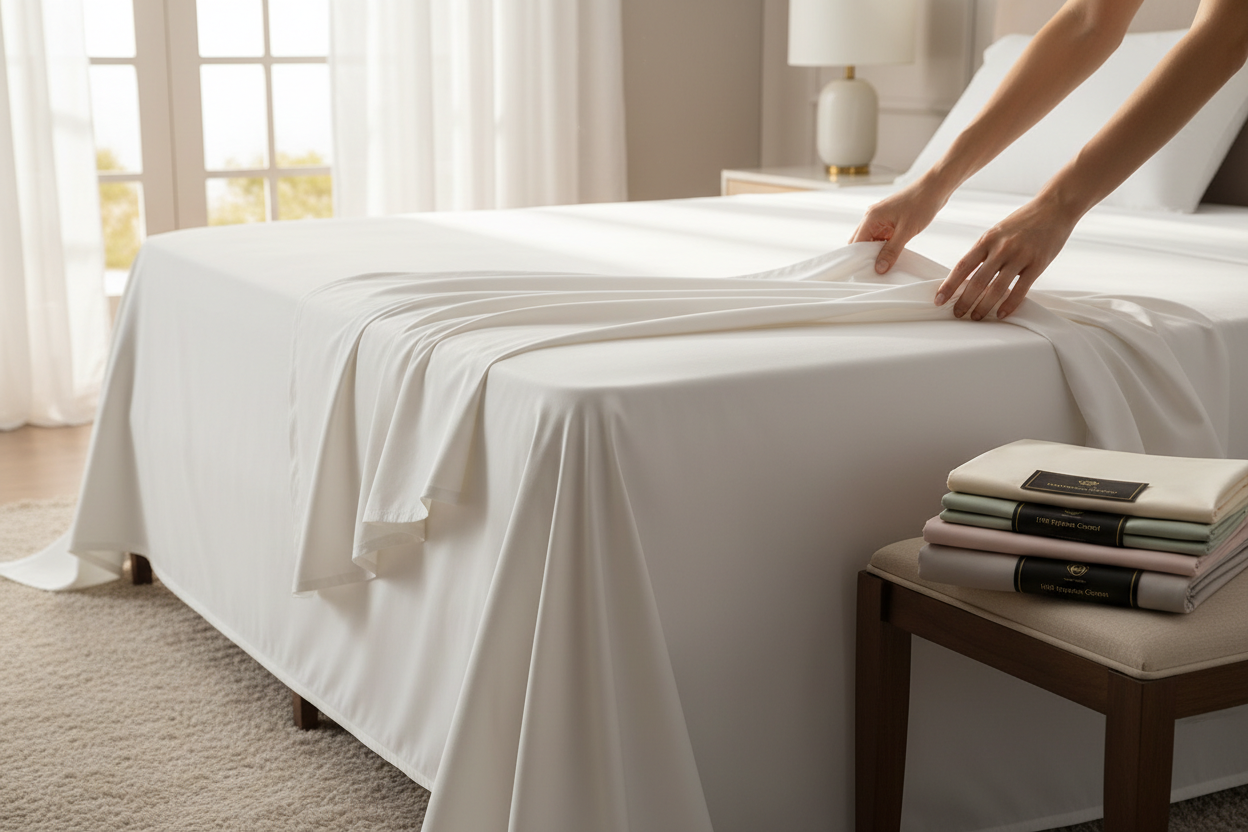
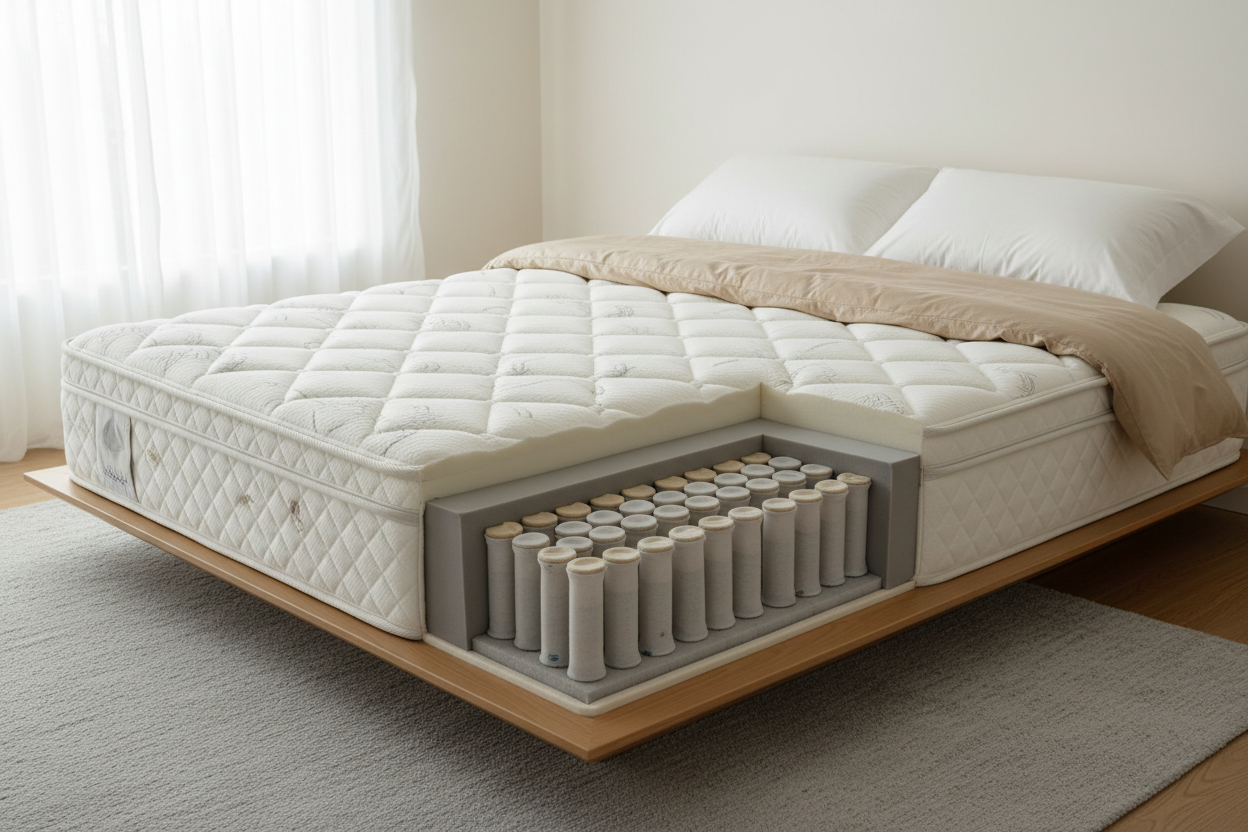
Bedding operates as a system: mattress properties, sheets, sleepwear, and comforter interact to create the bed microclimate that determines heat and moisture exchange with the room and with the body. Layers trap or release heat depending on porosity and materials, so mismatches—like heavy synthetic sheets under a breathable comforter—can negate a comforter's cooling design. Proper pairing means selecting sheets and sleepwear with complementary breathability and moisture-wicking traits and ensuring the mattress surface does not block airflow. Room-level factors such as humidity and ventilation also modulate how bedding performs; controlling those variables optimizes the system and reduces tendencies to toss and turn.
What Role Does Humidity Play in Sleep Quality and Comfort?
Humidity strongly influences evaporation efficiency: high indoor humidity reduces sweat evaporation, making sleepers feel hotter and increasing movement as the body tries to cool; low humidity increases evaporation but can cause dryness and discomfort. Recommended indoor humidity for sleep typically sits between 30–50% to preserve efficient heat transfer while avoiding mucosal dryness. Practical management strategies include using dehumidifiers in humid climates, humidifiers in very dry environments, and improving ventilation to maintain the ideal bedroom humidity for sustained comfort and fewer temperature-driven arousals.
How Can Choosing the Right Comforter Optimize Your Sleep Environment?
Choosing the right comforter means matching weight, fill, and outer fabric to personal heat tendency and local climate: hot-humid sleepers often benefit most from lightweight, moisture-wicking natural fibers such as eucalyptus or bamboo combined with ventilated construction, while those in cool climates may prefer PCM layers or merino wool blends for temperature buffering. Consider layered strategies—using a lightweight cooling comforter for warm months and an additional insulated duvet for cold months—to get year-round performance without excessive trapping. Care and maintenance, such as regular airing and appropriate washing, help preserve breathability and moisture-handling attributes and support ongoing thermoregulation performance.
How to Choose the Best Temperature Regulating Comforter for Restless Sleepers?
Selecting the best temperature-regulating comforter requires prioritizing a few core features—material, fill type, construction, and careability—while aligning choices to your sleep profile and bedroom environment. Essential criteria include active thermal management (PCM presence or high-performance moisture wicking), breathable outer fabrics (eucalyptus, bamboo, or TENCEL), construction that prevents heat pockets (channel quilting, baffled boxes), and clear care instructions to preserve performance. The EAV table below maps common sleep profiles to recommended materials and explains why each pairing helps reduce tossing and turning.
Introductory mapping of sleepers to recommended comforter options.
|
Sleep Profile |
Recommended Fill/Material |
Why It Helps |
|---|---|---|
|
Hot & humid sleeper |
Lightweight eucalyptus or bamboo cover with moisture-wicking fill |
Rapid moisture transport and high breathability reduce night sweats |
|
Hot & dry sleeper |
PCM-infused fill with ventilated synthetic shell |
Buffers temperature spikes while allowing airflow |
|
Cold-season sleeper |
Merino wool or layered PCM + insulating fill |
Regulates warmth without overheating during micro-warming |
|
Mixed-sleeper couple |
Dual-layer or split-weight comforter options |
Enables personalized thermal zones to limit partner disturbance |
This buyer mapping simplifies decision-making by aligning material performance with real-world sleep profiles.
What Features Should You Look for in a Cooling Comforter?
When evaluating cooling comforters, prioritize explicit features that indicate real thermoregulation capability rather than marketing claims: look for mention of PCM or phase change materials, verified moisture-wicking fibers such as TENCEL or eucalyptus, open/vented construction, and transparent fill weight specifications. Also verify construction details—baffle boxes prevent fill migration, channel quilting preserves airflow, and cover fabric breathability ratings matter as much as the fill. To test claims, check for material content, feel the cover fabric for airiness, and consider user reports or lab-backed performance metrics when available; the right combination reduces micro-arousals and supports uninterrupted sleep.
Key cooling features to prioritize:
- Active thermal buffering: PCM presence stabilizes transient heat spikes.
- Moisture-wicking cover: Natural fibers like eucalyptus move sweat away from skin.
-
Breathable construction: Channel quilting or baffles prevent heat trapping.
How to Match Comforter Types to Your Sleep Style and Climate?
Matching comforter types to sleep style and climate follows clear rules: hot-humid environments favor natural, highly absorbent fibers and ventilated construction, hot-dry regions gain from PCM buffering plus porosity, and cold climates require insulating but breathable fills to prevent overheating during micro-warming. For mixed-sleep households, consider split or dual-sided comforters, layering a thin cooling comforter under a removable insulated cover, or choosing modular systems that allow personalization. These practical pairings let each sleeper keep their skin microclimate within optimal ranges and reduce partner-triggered tossing and turning through thermal compromise rather than a one-size-fits-all approach.
For readers ready to explore options, sleeply sleep provides curated comforter categories designed around these matching principles; consider their product pages to compare models and specifications that align with your sleep profile.