Optimal Sleep Temperature and Personalized Chronotype Solutions for Restful Sleep
Roger Yin
Chronotype describes an individual’s natural timing for sleep and wakefulness, driven by circadian rhythm and behavioral patterns; understanding your chronotype helps tailor sleep temperature strategies to improve sleep onset and maintenance. Recent research shows that core body temperature follows a predictable circadian curve that interacts with environmental temperature to influence sleep propensity, REM/NREM distribution, and perceived comfort during the night. This article explains how chronotypes (Bear, Lion, Wolf, Dolphin) differ in timing and thermal needs, clarifies the physiology linking core temperature to sleep stages, and offers practical, personalized steps to align bedroom temperature, bedding, exercise, diet, and light exposure with your chronotype. You will find quick-reference tables, actionable checklists, and device-agnostic guidance for smart temperature control and coaching strategies designed to reduce social jetlag and insomnia risk. By the end, you will know how to set your bedroom environment and daily routines to support your circadian temperature rhythm and wake feeling more rested.
What Is a Sleep Chronotype and How Does It Affect Your Sleep Temperature Needs?
A sleep chronotype is an individual propensity for earlier or later sleep timing rooted in circadian phase, which shifts the timing of the core body temperature minimum and therefore changes when cooling supports sleep onset. Mechanistically, circadian phase determines when melatonin rises and core temperature falls; those timing differences influence whether pre-bed cooling or a slightly warmer environment improves sleep continuity. The specific benefit is that matching ambient and bedding strategies to your chronotype reduces sleep latency and nighttime awakenings by supporting natural thermoregulatory signals. Understanding chronotype helps you choose time-of-night temperature strategies rather than assuming one universal bedroom setting works for everyone.
What Are the Four Main Sleep Chronotypes and Their Characteristics?
The four common archetypes—Bear, Lion, Wolf, and Dolphin—describe typical sleep timing, alertness peaks, and common challenges, and each presents distinct temperature preferences linked to circadian phase. Bears tend to follow the solar day with steady energy and prefer moderate, stable bedroom temperatures; Lions are early risers with earlier core temperature minima and may sleep better with slightly cooler pre-bed routines. Wolves are evening types with delayed temperature minima who often need darker, cooler late-night conditions to fall asleep; Dolphins are light-sensitive and fragmented sleepers who may benefit from stable, slightly warmer bedding layers to prevent awakenings due to minor temperature fluctuations. Recognizing your archetype guides practical adjustments in thermostat scheduling, pre-bed cooling, and layering strategies to align environmental cues with biological timing.
Chronotype traits and quick temperature notes:
- Bear: Typical bedtime ~10–11pm, steady alertness, prefers consistent, moderate cooling to support sleep onset.
- Lion: Early bedtime ~9–10pm, high morning alertness, benefits from early-evening cooling and breathable bedding.
- Wolf: Late bedtime ~12am+, peak evening energy, needs timed nighttime cooling and strong light blocking to shift phase earlier.
- Dolphin: Irregular sleep, prone to awakenings, benefits from minimal temperature swings and moisture-wicking layers.
These archetypes are practical frameworks rather than strict labels; testing small temperature changes over weeks helps pinpoint what actually improves your sleep.
How Do Genetics and Age Influence Your Chronotype?
Genetic variants in circadian genes (for example, CLOCK and PER family genes) influence circadian phase, making some people biologically predisposed to earlier or later timing, which in turn shifts the timing of core body temperature nadir and sleep propensity. Age produces predictable shifts: adolescents commonly shift later (eveningness) with a delayed temperature rhythm, while older adults often shift earlier and have reduced amplitude of temperature cycles, which can increase night-time awakenings and reduce deep sleep. The practical implication is that schedule and temperature interventions should be age-aware—adolescents may need evening light management and later cooling windows, while older adults can benefit from stable warmth at sleep onset followed by gradual cooling to support REM/NREM balance. Small, consistent adjustments in light exposure and meal timing can complement temperature strategies to align behavior with genetic and developmental tendencies.
How Does Body Temperature Regulation Influence Sleep Quality Across Chronotypes?
Core body temperature regulation is central to sleep physiology: a falling core temperature signals sleep onset, and the timing and amplitude of that fall shape sleep depth and stage distribution across REM and NREM cycles. Lower core temperature at sleep onset facilitates deeper NREM sleep, while insufficient cooling can delay sleep and fragment consolidation; the circadian-driven temperature nadir typically occurs in the second half of the night and varies by chronotype. For readers, the key takeaway is that targeted cooling before and during early sleep supports sleep initiation for most people, though exact timing should match your chronotype’s temperature curve. Monitoring and adjusting bedroom ambient temperature and bedding to support a natural core temperature trajectory is a non-pharmacologic way to improve sleep quality.
Different mechanisms map to sleep outcomes in practical terms; the table below explains the physiological mechanism, its sleep effect, and an applied example relevant to chronotypes.
Temperature physiology mapped to sleep outcomes:
|
Mechanism |
Effect on Sleep |
Applied Example |
|---|---|---|
|
Core temperature fall |
Facilitates sleep onset and deep NREM |
Pre-bed cooling (cool shower or fan) 60–90 minutes before bed aids Bears and Lions |
|
Reduced thermoregulatory amplitude |
Fragmented sleep, reduced slow-wave sleep |
Older adults may benefit from stable bedding and timed thermostat drops |
|
Peripheral vasodilation |
Heat loss mechanism supporting sleep initiation |
Wearing breathable sleepwear or using cool feet strategies supports Wolves at late sleep onset |
|
Environmental heat stress |
Decreases REM/NREM continuity and increases awakenings |
High ambient heat disrupts Dolphins with sensitive sleep, increasing night wakings |
What Is the Role of Core Body Temperature in Sleep Cycles?
Core body temperature acts as a circadian signal that helps time sleep onset, with the descent in core temperature closely preceding and enabling the transition to sleep and deep NREM stages; the subsequent nadir supports restoration before temperature rises toward morning. Mechanistically, reductions in core temperature promote peripheral vasodilation and decreased arousal, which together lower sleep latency and increase slow-wave sleep when timing is optimal. Practically, a modest cooling window—achieved through ambient thermostat changes, a cool shower, or breathable sheets—can accelerate sleep onset for many chronotypes and improve sleep depth. Wearable temperature sensors and sleep trackers can inform individualized timing for these cooling cues, but device data should be interpreted alongside subjective sleep quality for best results.
How Does Environmental Temperature Impact Different Chronotypes?
Ambient bedroom temperature interacts with each chronotype’s sleep timing because the same thermostat setting can be aligned or misaligned with an individual’s circadian temperature rhythm, altering comfort and sleep stability. For example, Wolves who go to bed late may face cooler ambient conditions that either aid or hinder sleep depending on bedding—timed warming or cooling can be used to create a matching microclimate. Conversely, Lions who sleep earlier might require earlier drops in room temperature to match their earlier core temperature fall. Extremes—overly hot or cold environments—disrupt thermoregulation across all chronotypes, increasing arousals and shortening deep sleep, so aim for moderate, timed adjustments rather than one-size-fits-all extremes.
Practical ambient temperature adjustments by timing:
- Pre-bed cooling: Begin gentle cooling 60–90 minutes before intended sleep to support core temperature decline.
- Scheduled overnight stability: Keep overnight temperature stable with minimal swings to protect REM/NREM cycles.
- Chronotype-specific timing: Align thermostat schedules so the lowest room temperature coincides with your chronotype’s sleep onset window.
These timing-based adjustments help synchronize environmental cues with internal temperature rhythms to improve sleep continuity.
What Is the Ideal Sleep Environment Temperature for Each Chronotype?
Ideal bedroom temperature varies by chronotype because the optimal window for heat loss differs with circadian phase and behavioral timing; matching a moderate ambient temperature range to your chronotype reduces sleep latency and fragmentation. In general, a baseline moderate-cool bedroom supports sleep initiation, but Bears may prefer slightly warmer stability, Lions benefit from earlier cooling, Wolves need late-night cool preparedness, and Dolphins require minimal fluctuations and moisture control. Implementing thermostat schedules, timed fans, and bedding layering allows personalization without relying on continuous extreme settings.
Below is a comparison table with recommended temperature ranges, ideal sleep windows, and key environment adjustments for each chronotype.
Chronotype comparison for temperature and environment:
|
Chronotype |
Recommended Ambient Range |
Ideal Sleep Window |
Key Environment Adjustments |
|---|---|---|---|
|
Bear |
18–20°C (64–68°F) |
~10:00–11:00pm |
Moderate cooling pre-bed, breathable sheets |
|
Lion |
16–18°C (60–64°F) |
~9:00–10:00pm |
Early evening cooling, light-blocking curtains |
|
Wolf |
16–19°C (60–66°F) |
~12:00am+ |
Timed cooling later at night, strong darkness |
|
Dolphin |
17–20°C (62–68°F) |
Variable |
Stable microclimate, moisture-wicking layers |
These approximate temperature ranges serve as starting points based on general sleep research guidelines (16–20°C/60–68°F), adapted for each chronotype's typical sleep timing. Individual experimentation with 1–2°C changes over several nights reveals optimal comfort for your body, as chronotype-specific ranges represent practical guidance rather than empirically validated distinct optima
How to Set the Perfect Bedroom Temperature for Bears, Lions, Wolves, and Dolphins?
Setting the right bedroom temperature is a stepwise process: identify your chronotype window, schedule a gentle pre-bedroom temperature drop that aligns with your core temperature fall, and layer bedding to buffer night-time swings. For Bears, prioritize consistent moderate cooling and breathable fibers to avoid overheating; Lions should set earlier thermostat drops and use a thin duvet to allow early sleep-onset cooling. Wolves benefit from programmable cooling later in the night and blackout measures to support delayed phase alignment, while Dolphins should minimize temperature swings and use moisture-wicking sleepwear to reduce awakenings. Testing adjustments across several nights and keeping a sleep log helps determine whether changes reduce latency and awakenings.
- Identify chronotype window: Note your natural bedtime and wake time for a week.
- Program timed cooling: Set thermostat to start cooling 60–90 minutes before your usual sleep time.
- Layer strategically: Use breathable sheets and a removable top layer to fine-tune warmth during the night.
Following these steps makes temperature control practical and reversible, allowing you to refine settings without major disruption or expense.
Which Bedding and Sleepwear Best Support Temperature Regulation by Chronotype?
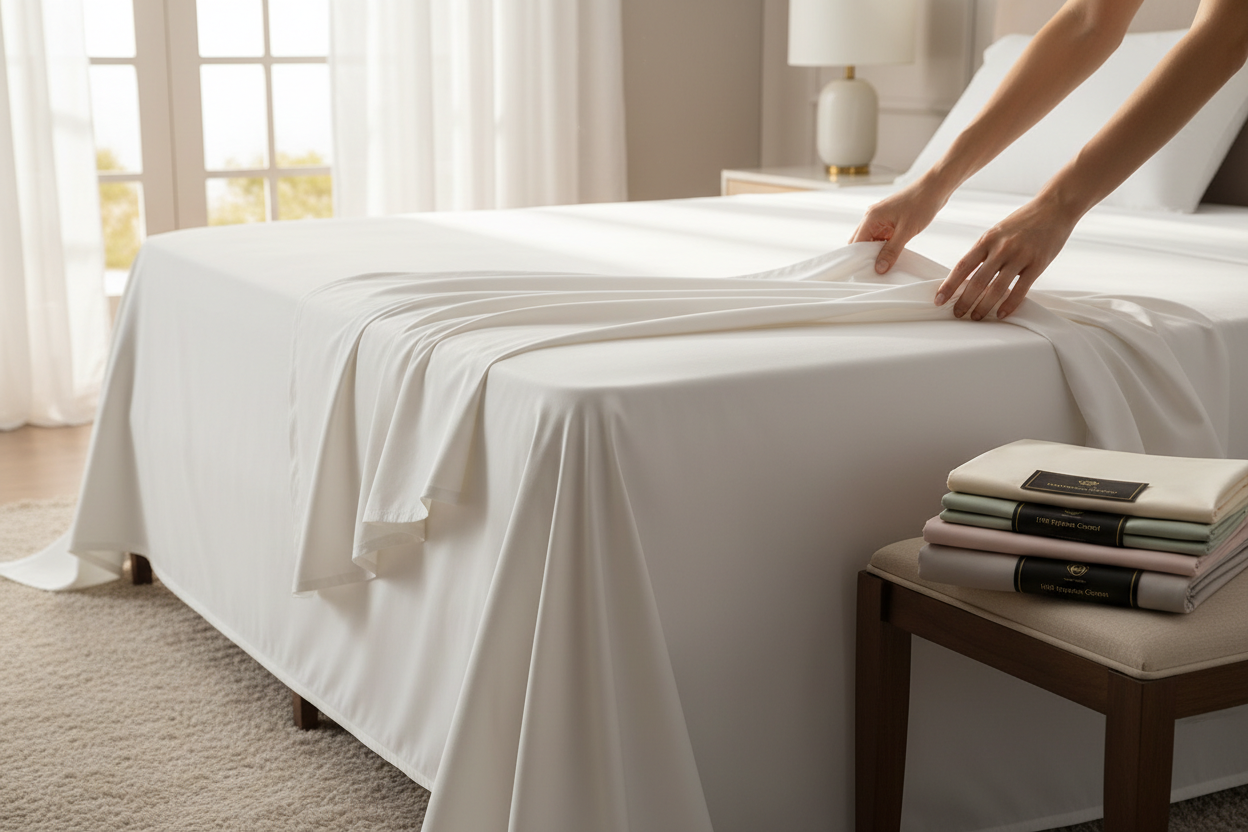
Bedding and sleepwear materials act as meronyms—components of the overall sleep environment—that directly influence heat exchange, moisture control, and perceived comfort; choosing the right fabrics and layering strategy supports thermoregulation across chronotypes. Natural fibers like cotton and linen offer breathability and moderate heat transfer, while moisture-wicking synthetic blends manage perspiration for sensitive sleepers. Lightweight, fitted sleepwear that avoids excessive insulation supports heat loss at sleep onset, and removable top layers like a dual-layer temperature-control comforter let you adjust warmth if your chronotype requires greater overnight stability.
Recommended materials and layering tips:
- Natural breathable sheets: Use cotton or linen as a base for most chronotypes.
- Moisture-wicking layers: Choose synthetic blends for Dolphins or those who sweat at night.
- Adjustable top layers: Keep a lightweight duvet plus thin blanket for on-the-fly warmth changes.
For readers wanting broader lifestyle and product information related to sleep environment choices, the provided website associated with visit Sleeply Sleep as a neutral resource to explore product concepts and lifestyle guidance without implying specific offerings.
A summary: combining fabric choice with layering and fit lets you tailor microclimate to your chronotype and minimize night wakings due to temperature discomfort.
How Can Lifestyle Adjustments Enhance Chronotype and Temperature Alignment?
Lifestyle choices—exercise timing, meal scheduling, and light exposure—act as behavioral Zeitgebers that shift circadian phase and interact with thermoregulation to improve sleep alignment. Exercise earlier in the day tends to advance circadian phase for evening types and supports a stronger temperature amplitude, while late-night vigorous activity can delay sleep for Wolves. Chrononutrition—scheduling larger meals earlier and avoiding heavy, late dinners—reduces postprandial thermogenesis near bedtime that can interfere with core temperature decline. Coordinating these lifestyle elements with temperature strategies produces synergistic benefits in sleep onset, depth, and daytime functioning.
What Exercise and Diet Strategies Support Better Sleep for Your Chronotype?
Exercise and dietary timing should be tailored: Lions and Bears often benefit from morning or early-afternoon workouts that reinforce early phase timing and support earlier temperature declines, while Wolves may shift to moderate late-afternoon sessions to reduce evening arousal without provoking delay. Meal timing matters: a lighter dinner 2–3 hours before bed reduces thermogenic effects that can keep core temperature elevated, and limited caffeine late in the day prevents delayed temperature and melatonin suppression. Sample schedule adjustments and consistent daily timing gradually shift circadian phase and improve alignment between body temperature rhythms and your ambient environment.
Example timing windows:
- Morning/early-afternoon workouts: Best for Lions and Bears to reinforce early phase.
- Late-afternoon moderate exercise: Helpful for Wolves without creating late-night arousal.
- Light dinners 2–3 hours pre-bed: Reduces thermogenesis that delays sleep.
These strategies, combined with temperature adjustments, strengthen the physiological signals that cue sleep at the intended time.
How Does Light Exposure and Melatonin Regulation Affect Sleep Timing?
Light exposure is the primary circadian entrainer: bright morning light advances circadian phase and shifts core temperature earlier, while evening light delays phase and suppresses melatonin, altering when the core temperature minimum occurs. For Wolves, increased morning light and reduced evening exposure help advance sleep timing, while Lions should preserve morning light to maintain early phase stability. Practical steps include 20–30 minutes of bright light exposure soon after waking for evening types and minimizing blue-rich screens in the two hours before bedtime across chronotypes to allow melatonin rise and supportive temperature decline.
- Morning light for night owls: 20–30 minutes soon after waking helps advance phase.
- Dim evenings for late types: Reduce bright light 2–3 hours before bed to prevent melatonin suppression.
- Consistent light timing: Stabilizes both melatonin rhythm and core temperature amplitude.
These light strategies create predictable circadian timing that makes temperature interventions more effective.
How Can Personalized Sleep Solutions Optimize Temperature and Chronotype Alignment?
Personalized sleep solutions combine individual assessment, behavioral coaching, and environment adjustments—often supported by technology—to create tailored plans that align temperature patterns with chronotype for measurable sleep improvements. A personalized approach assesses sleep timing, core temperature patterns (if available), and lifestyle constraints, then prescribes timed cooling/warming, bedding choices, and schedule shifts that fit the individual. Benefits include reduced sleep latency, fewer awakenings, and decreased social jetlag when interventions are applied consistently and monitored over weeks. For readers seeking next steps, explore Sleeply Sleep's features to learn about options for personalized guidance without implying specific products are sold.
Below is a comparison of solution types, how they adjust temperature or behavior, and the practical benefit they offer in a chronotype-aware plan.
|
Solution Type |
How It Adjusts Temperature/Behavior |
Typical Benefit |
|---|---|---|
|
Smart thermostat scheduling |
Automates ambient cooling/warming to match sleep window |
Reduces manual intervention, aligns room temp with chronotype |
|
Climate-adaptive bedding (product-agnostic) |
Layers or materials that modulate microclimate |
Minimizes overnight swings and improves continuity |
|
Sleep coaching / behavioral plan |
Timed light, exercise, diet, and temp prescriptions |
Addresses circadian phase and reduces social jetlag |
|
Wearable-informed scheduling |
Uses sensor data to suggest timing for cooling |
Personalizes timing for pre-bed cooling and naps |
What Smart Sleep Technologies Adjust Temperature for Your Chronotype?
Smart sleep technologies include programmable thermostats, climate-adaptive mattress pads, and sensor-driven controllers that schedule temperature changes and adapt to detected movement or sleep stage signals; these tools can automate the timing of cooling to match chronotype-specific sleep windows. Look for capabilities like multi-zone scheduling, sensor integration, and app-based controls that allow gradual pre-bed cooling and overnight stability. Pairing technology with chronotype routines—such as initiating cooling 60–90 minutes before a Wolf’s delayed bedtime—allows automation to reinforce behavioral strategies, but always verify privacy and data-sharing policies before adopting sensor-rich devices.
Capabilities to consider:
- Scheduling: Timed temperature changes that match your sleep window.
- Sensor integration: Motion or temperature sensors that adapt to occupancy.
- App controls and privacy: Controls should be easy to adjust and clear on data use.
These technologies can streamline personalization, yet simple non-tech methods (fans, layering) remain effective and accessible.
How Does Personalized Sleep Coaching Improve Chronotype-Based Sleep Quality?
Personalized sleep coaching combines assessment, small-step behavior changes, and consistent follow-up to shift circadian timing and optimize temperature strategies in a realistic timeframe; coaches set measurable goals, monitor progress, and adapt plans as sleep patterns change. Typical coaching outcomes include improved sleep timing, reduced social jetlag, and better subjective sleep quality within weeks to months, depending on baseline patterns and adherence. Coaching complements environmental and technological adjustments by addressing lifestyle, light exposure, and stress factors that interfere with thermoregulatory cues, and it can guide the safe, gradual phase shifts needed by some chronotypes.
- Assessment: Baseline sleep timing, temperature sensitivity, and lifestyle constraints.
- Plan: Timed cooling, light prescriptions, exercise/diet timing aligned to chronotype.
- Follow-up: Iterative adjustments and progress tracking.
Personalized coaching helps translate physiological principles into sustainable habits that reinforce temperature alignment and long-term sleep health.
For more information about personalized approaches and general lifestyle resources, browse the Sleeply Sleep shop or contact their team the provided website associated with sleeply sleep to explore ideas and guidance in a neutral context.