How Mattress and Comforter Work Together for Optimal Sleep Comfort and Temperature Regulation
Roger Yin
This table clarifies how multi-zone or adjustable pillows provide more precise alignment outcomes than single-profile alternatives. Next, we describe the CloudAlign pillow’s ergonomic benefits in greater detail.
What Ergonomic Benefits Does the Sleeply CloudAlign™ Pillow Provide?
The Sleeply CloudAlign™ Pillow uses a six-zone surface architecture and dual-height options to offer targeted support that matches head and neck contours for different sleeping positions. Zones vary in firmness and contour to cradle the head, support the neck, and reduce lateral shoulder pressure for side sleepers while providing a flatter surface for back or stomach sleeping. Dual-height support lets users select a higher loft for side sleeping or a lower profile for back sleeping, which complements mattresses of varying firmness by compensating for sinkage or lift. This design reduces cervical strain and helps maintain open airways, which improves restorative sleep quality when paired with an appropriately supportive mattress.
For best results, test the pillow with your mattress by checking lateral spine alignment and A mattress and comforter form a single sleep system where structure and insulation interact to shape comfort, support, and thermal balance. This article explains how that synergy works mechanically and practically, showing why mattress type, layering choices, and material properties determine nightly temperature regulation and pressure relief. Readers will learn mattress attributes that influence heat transfer, a step-by-step layering checklist for year-round comfort, pairing rules for hot and cold sleepers, pillow–mattress alignment principles, care routines to extend bedding life, and the benefits of certified sustainable fibers. The guidance emphasizes actionable tips—how to match comforter fill to a mattress, when to add a topper, and how breathable covers reduce trapped heat—so you can optimize your bed setup with clear, testable adjustments. Throughout, the article uses practical examples and product-aligned illustrations from Sleeply Sleep to show how modern comforters and pillows map to the layering and temperature strategies described.
What Role Does Your Mattress Play in Creating a Comfortable Sleep Environment?
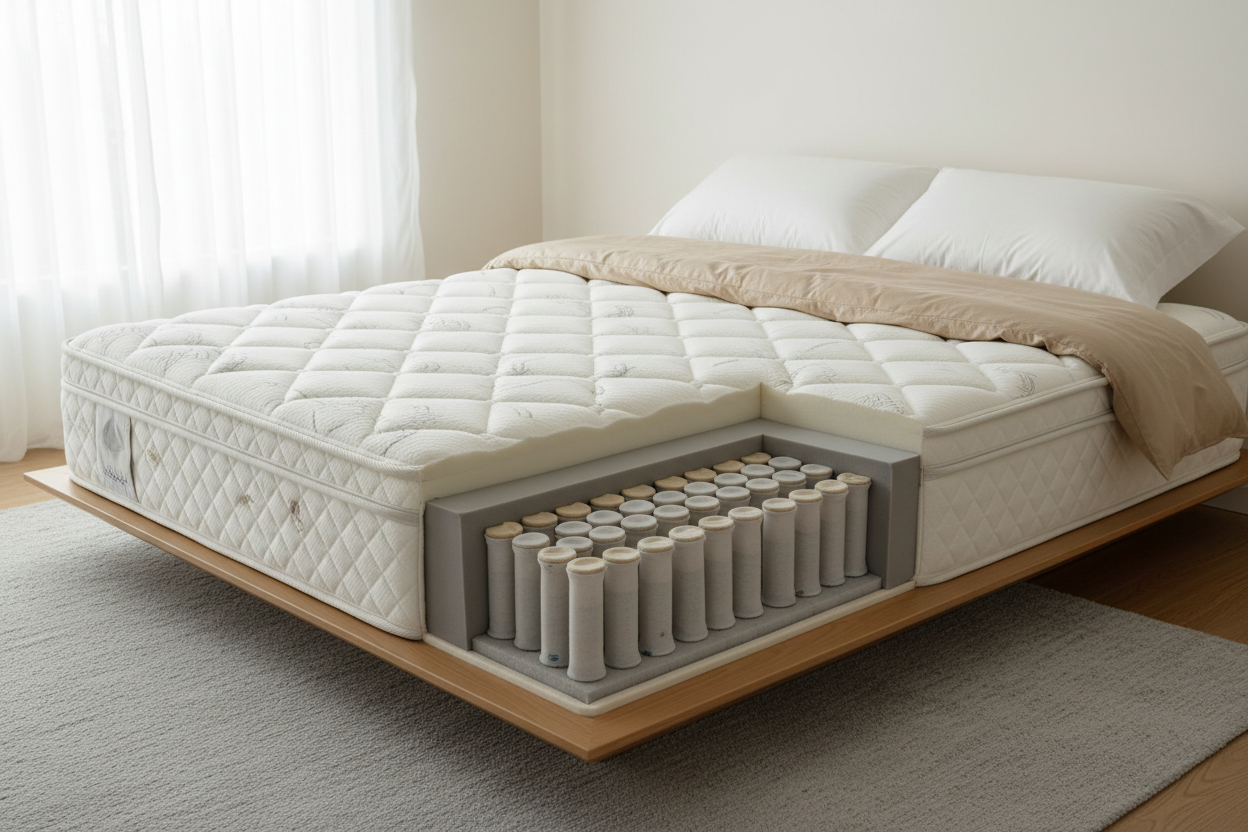
A mattress provides the structural foundation of the sleep environment by delivering support, pressure relief, and a baseline thermal behavior that interacts with overlying bedding. Mechanically, the mattress determines how much body heat is conducted away, how air flows around the sleeper, and how much insulation the comforter must supply to reach a target microclimate. A supportive mattress keeps the spine neutral while its construction—foam density, coil openness, and airflow channels—affects breathability and heat retention. Understanding mattress characteristics helps you select a complementary comforter and layering system that together promote consistent core temperature and uninterrupted sleep.
Mattress attributes that most directly influence comfort and sleep temperature include firmness, core support, and thermal design features such as cooling foams or zoned airflow. These attributes form the hypernym “sleep system” by defining the mattress’s role within bedding; they also act as meronyms when you consider components like foam layers, coil units, and toppers. The following list summarizes key mattress attributes and why they matter for pairing with a comforter.
- Firmness and support level: A mattress’s firmness affects spinal alignment and determines how much pillow height or topper softness you need for neutral posture.
- Thermal behavior and breathability: Materials like open-cell foam or innerspring coils affect how quickly heat dissipates from the body into the room.
-
Pressure relief and contouring: Highly conforming materials reduce pressure but may trap heat, requiring more breathable comforter choices.
These attributes point directly to actionable selection rules: match breathable comforter fills to heat-retentive mattresses and choose warmer, insulated comforters for highly breathable mattress constructions. Understanding how mattress types behave thermally leads to the next detailed comparison of different mattress families.
How Do Different Mattress Types Affect Sleep Comfort and Temperature?
Memory foam mattresses conform closely to the body, offering excellent pressure relief but often exhibiting higher heat retention due to dense layers that slow convective airflow. In contrast, innerspring and hybrid beds use coils or airflow channels to promote convection and faster heat dispersion, which typically reduces the warming effect and allows for slightly heavier comforters without overheating. Mattress toppers alter thermal dynamics by adding insulating or breathable layers; a wool or latex topper can add temperature regulation, while a thick foam topper may increase retained warmth. For sleepers on memory foam, choose a low-loft, highly breathable comforter or one with cooling, heat-adaptive fabric to offset retained heat; for innerspring or hybrid mattresses, prioritize comforter warmth level to match seasonal needs rather than aggressive cooling.
These mattress-type behaviors influence both comfort and the choice of bedding materials, so pairing rules are simple: reduce comforter loft for heat-retentive mattresses and add insulating layers for highly breathable mattress constructions. The next section explains how to layer those choices from protector to comforter for year-round temperature control.
How to Layer Your Bed for Year-Round Comfort and Temperature Control?
Layering a bed creates a controlled thermal gradient between your body and the room by combining protective, comfort, and insulating components in a defined order. The mechanism is straightforward: each layer contributes a specific function—moisture control, temperature regulation, support, or final insulation—and the correct order maximizes breathability while giving options for seasonal adjustment. Implementing a predictable layering sequence reduces nightly temperature swings and simplifies swaps when seasons change. Below is a concise, numbered checklist designed for quick selection and featured-snippet readiness.
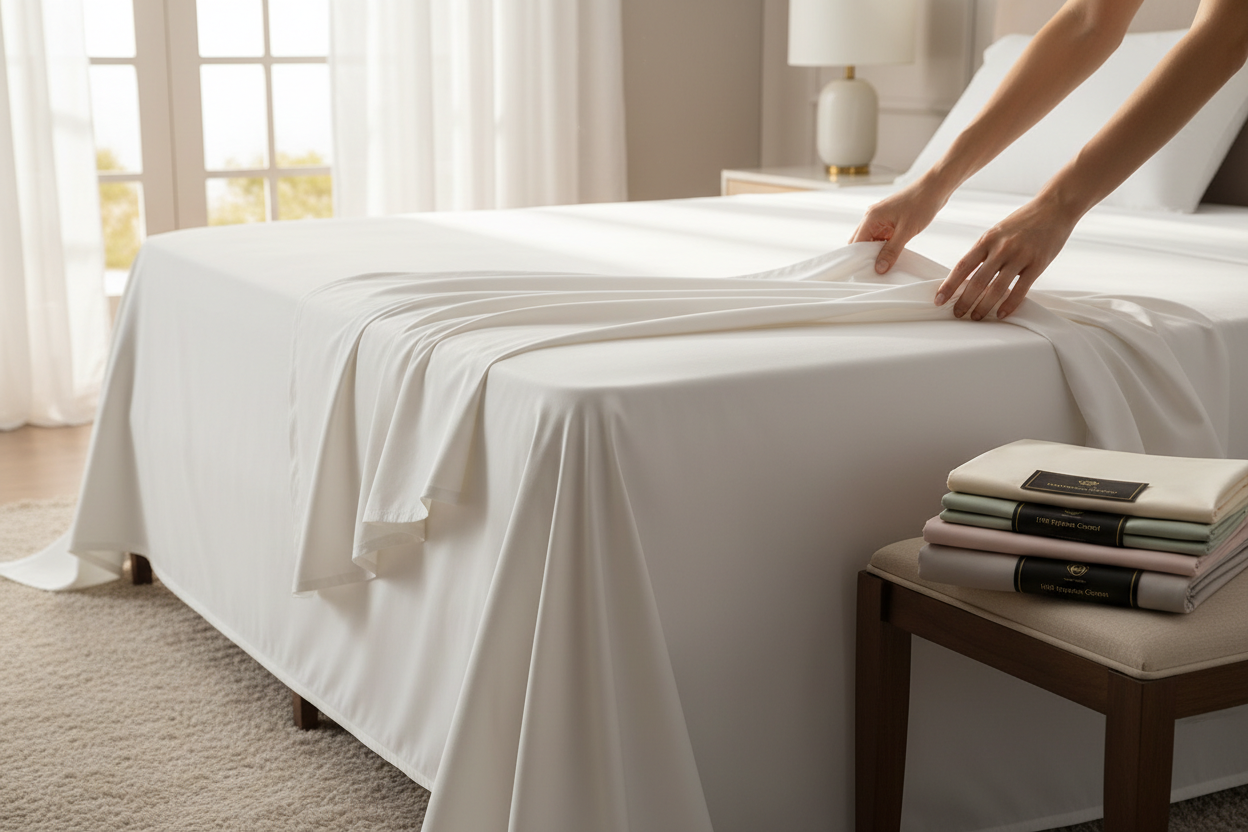
- Mattress protector: Create a moisture and allergen barrier that preserves mattress performance.
- Fitted sheet (breathable, natural fibers): Provide a cool, comfortable interface that wicks moisture.
- Mattress topper (optional): Adjust pressure relief and thermal behavior with materials like latex or wool.
- Lightweight blanket or low-loft comforter for warm months: Maintain minimal insulation while enabling airflow.
- Mid-weight comforter or zip-together dual-layer option: Use for transitional seasons; allow layering with lighter or heavier inserts.
- Heavy comforter or combined layers for cold months: Provide high insulation and maintain sleep temperature with breathable shell fabrics.
This checklist gives a practical path for "how to layer a bed" and supports quick seasonal swaps by changing the comforter layer rather than the mattress or sheets. The recommendation table below clarifies each layer’s role and preferred materials for temperature control.
|
Layer |
Role |
Recommendation |
|---|---|---|
|
Protector |
Moisture and allergen barrier |
Breathable, quilted protector with moisture-wicking surface |
|
Sheet |
Surface comfort and wicking |
Percale or sateen in cotton or Naia™ fibers for breathability |
|
Topper |
Adjust support and thermals |
Wool or latex for cooling; thin memory foam for targeted comfort |
|
Comforter |
Final insulation and loft control |
Low-loft breathable fill for hot sleepers; dual-layer zip options for seasonal flexibility |
What Are the Essential Bedding Layers from Sheets to Comforters?
Essential bedding layers each serve a distinct purpose in the microclimate and ergonomics of sleep: protect, comfort, modulate, and insulate. The mattress protector shields the core mattress from moisture and allergens while allowing airflow; fitted sheets create the immediate skin surface and should wick moisture and feel cool. Toppers modify support and change the heat transfer characteristics of the mattress—wool and latex toppers add breathability while foam toppers increase insulation. Comforters and duvets supply the final thermal envelope, where fill type, loft, and cover fabric determine warmth and breathability. Choosing each layer deliberately lets you compose a sleep system that adapts to seasonal changes and personal thermoregulatory needs.
Practical material tips reduce guesswork when assembling layers: pick natural or engineered breathable covers, favor low-to-medium loft fills when your mattress retains heat, and use a zip-together dual-layer comforter for flexible warmth options. These layer choices naturally lead to how specific product features, like integrated covers or machine-washable designs, simplify maintenance and versatility—topics we explore next through a real-world layering example tied to current product attributes.
How Does Sleeply Sleep’s Layering Approach Enhance Sleep Quality?
Sleeply Sleep maps its product features to layering roles by combining breathable fabrics, adaptable warmth, and practical care design to simplify day-to-day adjustments and maintenance. For example, a low-loft MarshMellow Comforter can serve as the primary warm-weather layer, while a Temperature Control Dual-Layer Comforter that zips together gives seasonal flexibility by enabling a light or combined warm setting. Integrated duvet covers and machine-washable construction reduce laundering friction and keep the surface layer hygienic without frequent dry-cleaning, which sustains loft and thermal performance. By aligning product attributes to each bedding layer—protector, sheet, topper, comforter—Sleeply Sleep’s approach demonstrates how targeted choices improve both temperature control and sleep quality.
This product-aligned example shows how a layering plan becomes operational: select a breathable sheet, add or remove a topper to tune support, and switch the comforter configuration for seasonal warmth. Understanding these practical mappings prepares you for deeper analysis of thermal interactions between mattress cores and comforter fills in the next section.
How Do Mattress and Comforter Synergy Improve Temperature Regulation?
Mattress and comforter synergy regulates sleep temperature through heat transfer processes—conduction, convection, and latent heat from moisture—where each bedding component either facilitates heat loss or adds insulation. The mattress’s thermal behavior influences how much residual heat the comforter must absorb or release; together they define the microclimate at the skin. Practical pairing rules emerge from this mechanism: choose breathable comforter shells and fills to support mattress heat dispersion, and select warmer comforters when mattresses allow rapid heat loss. Below are targeted tips for pairing and an EAV-style comparison to illustrate product vs. mattress interactions.
Research further supports the importance of understanding these thermophysiological responses in bedding.
- Match breathability: Use a breathable comforter with a heat-retentive mattress to avoid trapped warmth.
- Adjust loft to mattress conduction: Lower loft on dense foam mattresses; higher loft on innerspring beds if needed.
-
Use dual-layer systems: Combine layers to create flexible insulation without changing the mattress.
|
Item |
Attribute |
Value |
|---|---|---|
|
MarshMellow Comforter |
Breathability |
High, low-to-medium loft with breathable shell |
|
Temperature Control Dual-Layer Comforter |
Warmth level |
Adjustable via zip-together layers for light or combined warmth |
|
Memory foam mattress |
Best-for |
Pressure relief; tends to retain heat without cooling technologies |
|
Innerspring mattress |
Best-for |
Airflow and convection; pairs well with slightly warmer comforters |
These pairing recommendations translate mechanisms into actionable choices that reduce night sweats and improve thermal comfort. Next, we address cooling strategies specifically for hot sleepers and how product features support them.
What Temperature-Regulating Features Do Sleeply Sleep Comforters Offer?
Sleeply Sleep’s comforter lineup emphasizes fabric-level breathability, adaptive warmth control, and laundry-friendly construction to support consistent temperature regulation. Specific features include breathable OEKO-TEX® Standard 100 Class I fabric shells that limit chemical exposure while improving moisture transfer, heat-adaptive fill options that balance insulation and airflow, and a zip-together dual-layer architecture that lets sleepers switch between light and combined warmth. Machine-washable designs and integrated duvet covers make laundering simpler, which preserves fabric porosity and fill loft—both critical to maintaining thermal performance over time. These features collectively reduce the need for extra layers while allowing rapid seasonal changes without replacing the entire bedding set.
Comparing these features with common comforter traits shows why targeted design choices matter: a breathable shell reduces trapped moisture, dual-layer adaptability replaces multiple separate comforters, and washable construction sustains long-term breathability. Understanding these product features helps hot sleepers choose appropriate cooling solutions, which we detail in the following subsection.
How Can Hot Sleepers Benefit from Cooling Bedding Solutions?
Hot sleepers benefit from cooling bedding by prioritizing materials and configurations that enhance airflow, moisture wicking, and rapid heat dissipation from the skin. Strategies include selecting low-loft or heat-adaptive comforters with breathable shells, using natural or engineered fibers in sheets that wick moisture, and opting for mattress toppers that promote airflow rather than trapping heat. Implementing a dual-layer comforter approach allows hot sleepers to use the lighter layer year-round and add the secondary layer only when needed, maintaining a cooler baseline. Pair cooling pillows and breathable mattress surfaces with these bedding choices to create a cohesive cooling system across the entire sleep surface.
- Choose breathable covers and low-loft fill to increase convective cooling.
- Use a dual-layer comforter so you can detach the warmer layer on hot nights.
-
Add an airflow-promoting topper made from latex or wool instead of thick foam.
Applying these tactics reduces overheating symptoms and improves sleep continuity; next we turn to how pillows interact with mattresses to support spinal alignment while complementing thermal strategies.
How Do Pillows and Mattresses Work Together for Spinal Alignment and Support?
Pillows and mattresses work together to maintain a neutral spine by ensuring head, neck, and shoulders remain aligned with the torso, which reduces strain and supports uninterrupted sleep. Mechanically, mattress firmness determines how much the body sinks, which then dictates required pillow height and contour to fill the cervical gap and keep the airway open. An effective pairing matches pillow loft to mattress compression and sleep position—side sleepers usually need higher profile support, while back and stomach sleepers require lower lofts. This alignment relationship forms a semantic triple: mattress firmness → dictates → pillow height, and managing that relationship improves both comfort and breathing during sleep.
Further research highlights the ongoing efforts and challenges in optimizing mattress design for ideal biomechanical comfort and spinal alignment.
To assess alignment, simple adjustments and tests can verify outcomes: use the hand-test to estimate sinkage, observe spine alignment in a side-view photo, or adjust pillow height incrementally until the neck remains in line with the torso. The following table maps pillow product features to alignment benefits and shows how the Sleeply CloudAlign™ Pillow’s zone features complement different mattress behaviors.
|
Pillow/Product |
Feature |
Benefit |
|---|---|---|
|
Sleeply CloudAlign™ Pillow |
6 sleep zones, dual-height support |
Customized cervical support and adaptable loft for multiple sleep positions |
|
Standard contoured pillow |
Single profile |
Limited adaptability; best for consistent sleepers |
|
Adjustable-fill pillow |
Removable fill |
Fine-tuned loft to match mattress sinkage and personal preference |
making small adjustments to fill or height until the ear, shoulder, and hip form a straight line. With this alignment principle established, the next section addresses care and maintenance practices that preserve both mattress and comforter performance over time.
How Can You Maintain Your Mattress and Comforter for Longevity and Hygiene?
Regular care preserves the functional properties of mattresses and comforters—support, loft, and breathability—by managing moisture, debris, and mechanical stress. The maintenance mechanism involves periodic cleaning of surface layers, rotation to distribute wear, and airing to reduce trapped moisture that can degrade fill and encourage allergens. Practical routines include weekly sheet changes, monthly airing or sunlight exposure when feasible, and seasonal washing or professional cleaning of comforters when design allows. These steps reduce odor, maintain loft, and preserve thermal performance, extending both hygiene and life expectancy of bedding components.
Key maintenance tasks should be scheduled and simple so they become habits rather than chores. The numbered checklist below gives a pragmatic routine to protect both mattress and comforter and to detect when replacement is necessary.
- Change and wash sheets weekly to remove oils and sweat that degrade fabrics.
- Air and rotate the mattress every 3 months to prevent permanent body impressions and balance wear.
- Wash or launder comforter according to manufacturer guidance; use machine-washable options when possible for regular cleaning.
- Use a protector and vacuum surface occasionally to limit dust and allergens.
- Inspect loft and support yearly to determine replacement needs when loft loss or sagging appears.
Following these steps preserves thermal and support characteristics; the final subsection explains how design choices by some manufacturers simplify these maintenance demands.
What Are the Best Practices for Cleaning and Caring for Bedding?
Best practices combine frequency, appropriate methods, and material-appropriate cleaning to maintain performance without damaging fills or fabrics. Sheets should be laundered weekly in warm water with mild detergent and dried thoroughly to avoid lingering moisture; mattress protectors can often be machine-washed monthly. Comforters require attention to fill type and construction—machine-washable comforters should be laundered per care labels, while delicate fills may need professional cleaning or spot care to preserve loft. Storing bedding in breathable containers and avoiding compression preserves fill structure, while timely repairs of small tears prevent fill loss and larger damage.
When cleaning, avoid high-heat drying for delicate fills and tumble with dryer balls or clean tennis balls to help restore loft; for memory-foam toppers, use spot cleaning and allow full air-drying to prevent breakdown. These care principles reduce allergen buildup and maintain thermal behavior, and the next subsection highlights product designs that aim to make maintenance simpler for consumers.
How Do Sleeply Sleep Products Simplify Bedding Maintenance?
Sleeply Sleep’s product designs emphasize machine-washable fills and integrated duvet covers to reduce the labor and cost of cleaning while protecting loft and fabric integrity. Integrated covers mean fewer layers to remove and reassemble, which streamlines laundering and limits handling that can compress fills. Machine-washable comforters reduce reliance on dry-cleaning, enabling more frequent cleaning that maintains surface hygiene and breathability. These design choices directly support longer-lasting thermal performance by keeping fabrics porous and fills lofted through regular, user-friendly care routines.
By reducing maintenance friction, these product features help sleepers sustain the intended temperature and support performance of their sleep system over time. After care and maintenance, material selection plays a final role in both health and environmental outcomes, which the next section explores.
Why Choose Sustainable and Innovative Bedding Materials for Your Sleep System?
Sustainable and certified materials improve sleep health by minimizing exposure to harmful chemicals, enhancing breathability, and often providing durable performance that preserves comfort over time. Certifications such as OEKO-TEX® Standard 100 Class I indicate fabrics tested for harmful substances, which reduces skin irritation and chemical off-gassing risks—important for sensitive sleepers and those prioritizing indoor air quality. Naia™ sustainable fibers offer a balance of softness, breathability, and eco-conscious sourcing, contributing to a sleep surface that feels comfortable while aligning with environmental goals. Selecting certified and sustainable materials thus benefits both personal health and the planet while supporting consistent thermal behavior.
Material choice also affects practical performance: breathable sustainable fibers wick moisture effectively and retain structural integrity through repeated washing, which preserves both hygiene and thermal regulation capacity. The next table summarizes certification and fiber benefits related to sleep health to make selection decisions clearer.
|
Material/Certification |
Attribute |
Sleep Health Benefit |
|---|---|---|
|
OEKO-TEX® Standard 100 Class I |
Chemical safety testing |
Reduces exposure to harmful substances; lowers irritation risk |
|
Naia™ sustainable fibers |
Source-to-fabric sustainability |
Breathable, soft, and durable; lower environmental footprint |
|
Hypoallergenic fills |
Low allergenicity |
Minimizes allergic reactions and supports clearer breathing during sleep |
How Do OEKO-TEX® Certified and Naia™ Sustainable Fibers Enhance Sleep Health?
OEKO-TEX® Standard 100 Class I certification means the fabric has been tested for harmful chemicals and deemed safe for direct contact with sensitive skin, which reduces irritation and supports a healthier sleep surface. Naia™ fibers, produced from sustainably sourced wood pulp, offer a soft, breathable alternative to conventional synthetic fibers and perform well in moisture management and laundering durability. Together, these material choices lower the risk of skin and respiratory irritation while maintaining fabric porosity, which aids convective and evaporative cooling. Selecting bedding with these attributes supports both immediate comfort and long-term sleep environment quality.
In practical terms, these fibers help maintain stable microclimates at the skin surface and stand up to frequent washing without losing breathability—key properties for consistent temperature regulation and hygiene. The following subsection maps these attributes to Sleeply Sleep’s stated material choices.What Makes Sleeply Sleep’s Bedding Environmentally Friendly and Comfortable?
Sleeply Sleep highlights OEKO-TEX® Standard 100 Class I fabrics and Naia™ sustainable fibers in product constructions to combine verified material safety with breathable, comfortable textiles. These specifications aim to reduce chemical exposure and provide durable, washable materials that retain loft and porosity after repeated laundering. Integrated design elements—like machine-washable fills and integrated covers—work in concert with these materials to ensure longevity and reduce the environmental cost of frequent dry-cleaning or premature replacement. For eco-conscious shoppers, these attributes create a sleep system that balances comfort, health, and reduced environmental impact.
Choosing such materials means you get a bedding environment that supports clearer breathing, less skin irritation, and reliable temperature behavior across seasons, enabling a sleep setup that is both humane to the body and considerate of environmental footprint.