How Ideal Bedroom Humidity and Bedding Choices Improve Sleep Quality
Roger Yin
Bedroom humidity and bedding interact as a single sleep-environment system that directly affects thermoregulation, skin microclimate, and airway comfort, producing measurable changes in sleep continuity and restorative depth. This article explains how relative humidity ranges influence sweat evaporation and core temperature regulation, how high or low humidity drives allergen growth or mucosal irritation, and which bedding materials best support moisture management for different climates. Readers will learn evidence-based humidity targets, practical thresholds for humidifier or dehumidifier use, and fabric recommendations—bamboo, linen, and cotton percale—that optimize cooling and comfort for hot, humid conditions. The guide also covers device selection criteria, features to prioritize for quiet overnight operation, and step-by-step monitoring and care routines to preserve moisture-wicking performance. By following the measurement-to-personalization workflow outlined here, you can reduce night wakings, limit allergen exposure, and maintain a stable microclimate that supports deeper REM and NREM sleep.
What Is the Ideal Bedroom Humidity for Better Sleep?
Relative humidity (RH) describes the percent of moisture in air relative to its maximum capacity at a given temperature, and RH influences sleep by altering sweat evaporation and mucosal comfort, which together affect thermoregulation and sleep-stage stability. Maintaining an RH within an optimal band supports efficient evaporative cooling at the skin surface, reducing wakefulness from overheating and minimizing airway dryness that fragments sleep. Current guidance commonly cites an EPA-oriented band and a slightly wider researcher-recommended band that balance allergen risk and respiratory comfort. Measuring RH near the bed and using simple thresholds lets sleepers choose targeted interventions—humidify when air is too dry, dehumidify when it’s too moist. The following subsection explains the physiology of RH’s effect on thermoregulation and subsequent sleep outcomes.
How Does Relative Humidity Affect Sleep Quality and Thermoregulation?
Relative humidity affects sleep quality by changing how effectively sweat evaporates from the skin, and evaporation efficiency is a primary driver of overnight cooling that signals the brain to progress through deep and REM sleep. When RH rises, evaporative heat loss decreases, skin temperature remains elevated, and the body struggles to lower core temperature, increasing micro-arousals and reducing time spent in restorative sleep stages. Conversely, at lower RH evaporation can be efficient but airway surfaces dry, leading to irritation and awakenings; thus, both extremes undermine sleep continuity. Understanding this mechanism helps prioritize interventions that restore efficient heat loss without compromising mucosal hydration, which the next subsection converts into numeric thresholds and actionable ranges.
What Are the Recommended Humidity Ranges for Optimal Sleep?
Quick numeric guidance clarifies when to act: many authorities recommend an RH range centered around 30–50%, while some sleep researchers allow 40–60% as acceptable depending on climate and health needs, and thresholds outside these bands increase specific risks. Use the table below to compare common recommendations and practical action points so you can match interventions to measured RH in the bedroom.
|
Parameter |
Recommendation |
Rationale |
|---|---|---|
|
Baseline recommended RH |
30–50% |
Balances mold/dust-mite suppression and mucosal comfort (EPA-oriented) |
|
Researcher/clinician range |
40–60% |
Allows slightly higher RH for perceived comfort while monitoring allergen risk |
|
Concern threshold (high) |
>60% RH |
Elevated risk for mold growth and dust mite proliferation; dehumidify |
|
Concern threshold (low) |
<30% RH |
Increased nasal/throat dryness and disrupted mucociliary clearance; humidify |
This table shows that numeric RH targets guide practical choices: humidifiers are useful below about 30% RH to restore airway comfort, while dehumidifiers are recommended above roughly 60% RH to limit allergen growth. The action thresholds provide a clear measurement-to-intervention workflow to preserve sleep physiology and comfort.
How Does Humidity Influence Sleep Disruptions and Allergen Growth?
Humidity changes the bedroom ecosystem in ways that directly alter allergen populations and airway inflammation, which in turn fragment sleep through nasal congestion, coughing, and inflammatory responses. High RH supports biological growth cycles for dust mites and mold, increasing allergen load and triggering asthma or allergic rhinitis symptoms that interrupt sleep. Low RH dries mucous membranes, impairs mucociliary clearance, and makes the upper airway more reactive to irritants, causing nighttime awakenings and reduced sleep efficiency. Practical mitigation combines RH control with bedding choices and cleaning strategies to reduce exposure to allergen reservoirs. The next subsections detail why high RH favors organisms like dust mites and mold, followed by the respiratory consequences of low RH and targeted fixes.
Why Do High Humidity Levels Promote Dust Mites and Mold in Bedrooms?
High indoor humidity creates an environment where mold spores and dust-mite populations increase because both organisms rely on ambient moisture for reproduction and metabolic activity, and sustained RH above about 60% accelerates growth. Dust mites absorb water from humid air, which boosts reproduction and fecal production—the primary allergen—while mold colonies expand on damp textiles, drywall, and mattress materials, releasing spores that inflame airways. These biologically driven increases in allergen exposure commonly manifest as nighttime nasal congestion, wheeze, or cough that fragment sleep architecture. Mitigation combines targeted dehumidification, improved ventilation, and moisture-resistant bedding surfaces to interrupt life cycles of these organisms and reduce nocturnal symptoms that disturb sleep.
What Are the Consequences of Low Humidity on Respiratory Comfort During Sleep?
Low relative humidity dries the nose, throat, and airway lining, which impairs mucociliary clearance and increases the likelihood of irritation, sore throat, and micro- awakenings that reduce overall sleep quality. Dry mucosa can also heighten sensitivity to airborne particles and promote snoring or awakenings from throat dryness, while people with chronic respiratory conditions may notice worsened symptoms overnight. Simple remediation—such as using a bedroom humidifier when RH falls below approximately 30%, nasal saline before bed, and avoiding direct forced-air drafts—restores mucosal hydration and reduces symptom-driven wakefulness. These low-humidity strategies complement allergen control measures and support a smoother transition into deeper sleep stages.
Which Bedding Materials Are Best for Humid Climates to Enhance Sleep?
Choosing bedding materials for humid climates prioritizes breathability, rapid drying, and moisture-handling capacity because fabrics influence the local skin microclimate and evaporative cooling that supports sleep. Fabrics with open weaves and natural fibers typically allow better air exchange and wick moisture away from skin, promoting evaporation even when ambient RH is elevated. Assessing material properties—breathability, moisture-wicking, durability, and sustainability—helps match bedding to regional climate and personal thermoregulation needs. The table below compares common materials with attributes relevant to humid environments and offers practical guidance for selection and care.
|
Material |
Breathability / Moisture Management |
Notes |
|---|---|---|
|
Bamboo viscose |
High moisture absorption; good wicking |
Soft feel, cool hand; sustainable sourcing varies |
|
Linen |
Excellent breathability; fast drying |
Highly breathable and durable; ideal for humid heat |
|
Cotton percale |
Good breathability; moderate wicking |
Crisp weave, widely available, balances cost and performance |
What Are the Benefits of Bamboo, Linen, and Cotton Bedding for Moisture Management?
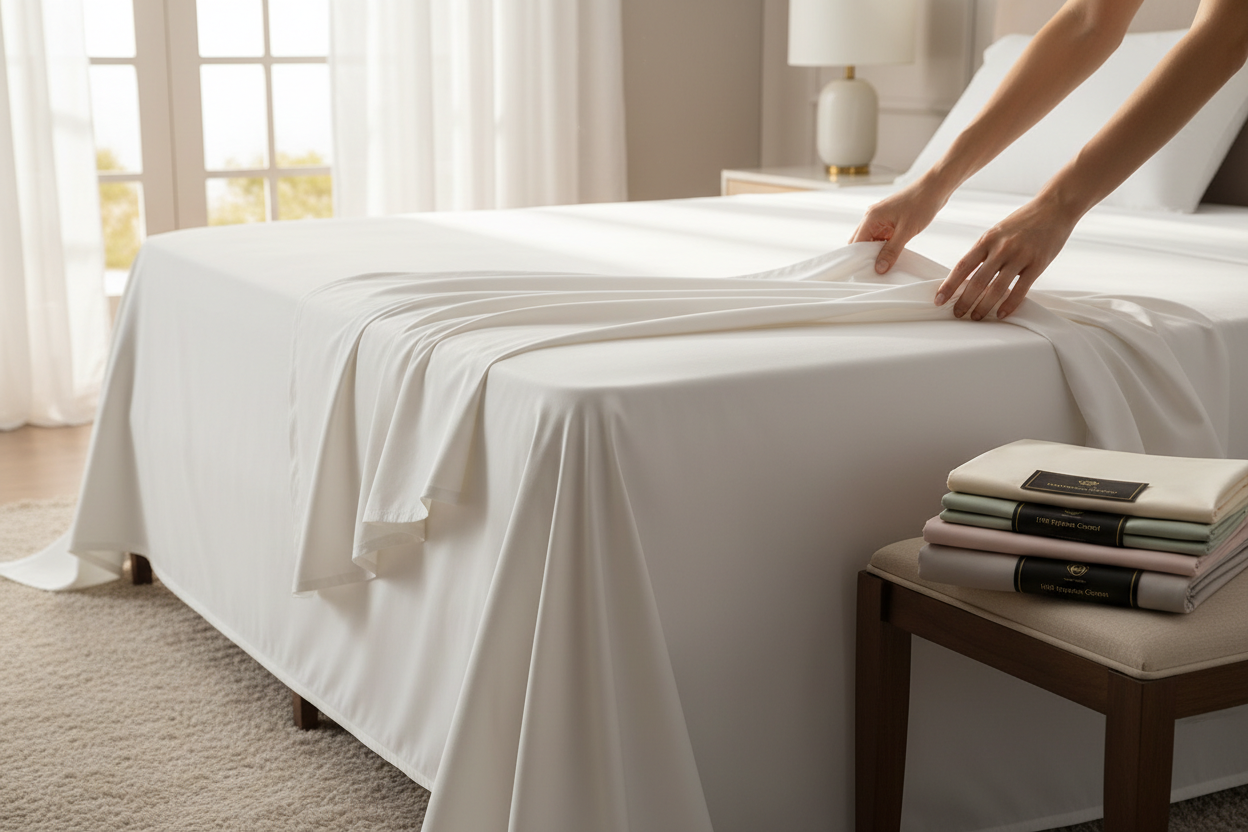
Bamboo viscose sheets often absorb and redistribute moisture more effectively than standard cotton because their fiber structure allows higher moisture uptake, which can improve perceived coolness and reduce cling during the night. Linen's loosely woven flax fibers permit excellent air circulation and rapid drying, making it particularly suitable where humidity spikes are common; its durability also resists mildew when cared for properly. Cotton percale combines a breathable plain weave with easy maintenance and affordability, offering a familiar option that performs well if layered appropriately with moisture-wicking underlayers. Understanding these material differences guides purchases toward textiles that support evaporative cooling and long-term comfort in humid bedrooms.
How Do Moisture-Wicking Sheets Improve Thermoregulation and Night Sweats?
Moisture-wicking sheets use fiber properties and weave structures to move sweat away from the skin surface into outer fabric layers where evaporation can occur, and this transport mechanism enhances perceived cooling and reduces interruptions from night sweats. For hot sleepers, wicking fabrics lower local skin humidity and improve heat loss, which translates into fewer micro-arousals and longer uninterrupted sleep periods. Care is essential: avoid fabric softeners and high-heat drying, which can degrade wicking finishes and reduce effectiveness over time. Proper maintenance preserves the sheets’ ability to manage moisture and sustain thermoregulatory benefits across seasons.
How Can Humidifiers and Dehumidifiers Improve Sleep Quality?
Humidifiers and dehumidifiers act as targeted environmental controls: humidifiers add moisture to dry air to protect airway comfort and skin hydration, while dehumidifiers remove excess moisture to suppress mold and dust-mite growth and reduce clamminess that impairs evaporative cooling. Selecting the right device depends first on measured RH in the bedroom and second on sleep symptoms—dry throat and nasal irritation suggest humidification, while persistent dampness and musty odors indicate dehumidification. Device selection should also factor in noise, auto-humidistat functionality, and maintenance burden because overnight sound and upkeep directly affect adherence and long-term efficacy. The table below summarizes device types, when to use them, and key features to consider.
|
Device Type |
Use Case / Capacity |
Key Features |
|---|---|---|
|
Ultrasonic humidifier |
Use when RH <30% for small to medium bedrooms |
Quiet operation, low energy; requires routine tank cleaning |
|
Evaporative humidifier |
Use when even humidification distribution is needed |
No over-humidification, uses wick filters; maintenance on filters |
|
Compressor dehumidifier |
Use when RH >60% or in persistently damp rooms |
Higher capacity for removing moisture; needs drainage or tank |
|
Refrigerant dehumidifier |
Use in warm, humid climates |
Efficient moisture removal, moderate noise, regular filter care |
When Should You Use a Humidifier or Dehumidifier for Sleep Optimization?
Use a simple rule: consider a humidifier if bedroom RH consistently falls below about 30% and you experience dry throat, nasal congestion, or disrupted sleep; consider a dehumidifier if RH consistently exceeds about 60% or you notice musty odors, visible dampness, or allergy symptoms at night. Measure RH with a hygrometer for several nights and across seasons before buying a device, and match capacity to room volume to prevent frequent cycling. Symptom-based matching—dry symptoms versus congestion/allergic response—provides a practical decision path that safeguards thermoregulation and limits allergen-driven sleep fragmentation. After choosing a device, prioritize quiet models with auto-humidistats to reduce manual adjustments and preserve overnight stability.
What Features Should You Look for in Sleep-Enhancing Humidity Control Devices?
When selecting devices for overnight sleep improvement, prioritize quiet operation, reliable auto-humidistats that maintain set RH bands, and easy maintenance to ensure continued performance without disruptive upkeep. Additional desirable features include scheduling or night modes, low-noise fans, filter indicators for dehumidifiers, antimicrobial tanks or coatings for humidifiers, and compatibility with external humidity sensors for more accurate control. Consider power consumption and tank capacity relative to room size to minimize refills or cycling that could disturb sleep. These features together determine how seamlessly a device integrates into a nightly routine and whether it will actually be used consistently to preserve sleep-friendly humidity.
- Quiet operation: Lower decibel levels reduce sleep disturbance.
- Auto-humidistat: Automated RH control prevents overcorrection.
- Easy maintenance: Removable tanks and clear cleaning routines improve adherence.
-
Appropriate capacity: Match device size to bedroom volume to avoid frequent cycling.
What Integrated Sleep Environment Solutions Combine Humidity and Bedding for Optimal Rest?
egrated solutions pair appropriate humidity control with moisture-managing bedding to create a synergistic sleep microclimate that supports thermoregulation, reduces allergen exposure, and minimizes night sweating. A practical personalization workflow—measure baseline RH, identify symptom patterns, choose device type, and select bedding materials that complement the device’s effect—delivers the best outcomes. Smart climate control devices and moisture-wicking textiles together maintain skin-surface conditions that favor deeper REM and NREM cycles while lowering allergen loads on mattresses and linens. The following subsections describe how to personalize an environment and how smart controls can automate and stabilize conditions overnight.
How Does Personalized Sleep Environment Design Improve Comfort and Health?
Personalization starts by measuring bedroom RH and temperature across several nights, mapping those readings to symptom patterns such as night sweats, congestion, or frequent awakenings, and then choosing an RH target and bedding system tailored to your climate and physiology. For example, a hot, humid sleeper may pair linen bedding with active dehumidification and a fan to maintain evaporative cooling, while a dry-winter sleeper may combine moisture-wicking sheets with a small ultrasonic humidifier on a timer. This stepwise approach—measure, adjust, re-test—reduces trial-and-error and promotes measurable improvements in sleep continuity and respiratory comfort. Personalized setups also allow for incremental adjustments and monitoring to capture seasonal shifts or changes in health status.
What Role Do Smart Climate Control Devices Play in Maintaining Ideal Sleep Conditions?
Smart thermostats, humidistats, and integrated bedroom sensors can automate RH control by maintaining set ranges overnight, using schedules, and integrating with sleep-tracking data to apply rules such as gentle overnight reduction of temperature or humidity during REM periods. Automation reduces manual intervention, improves adherence to ideal RH bands, and allows closed-loop adjustments informed by patterns of awakenings or reported sleep quality. Privacy and data considerations should be reviewed, but when used appropriately, smart controls deliver sustained consistency that manual adjustments rarely achieve. This automation removes a significant barrier to long-term environmental consistency and helps protect the gains achieved through bedding and device selection.
- Baseline measurement tools: Hygrometers and temperature sensors to map conditions.
- Control devices: Humidifiers or dehumidifiers sized for the room’s volume.
- Moisture-managing bedding: Sheets and protectors that wick or shed moisture.
-
Automation or smart controls: Optional for hands-off maintenance of target RH.
Note on product options: For readers who prefer ready-made bundles or curated product sets, Sleeply Sleep offers integrated sleep-environment recommendations and humidity-and-bedding product categories optimized for personalized setups. These offerings emphasize matched device-and-textile combinations, educational resources, and configuration guidance to simplify the measurement-to-personalization workflow described above.
How Can You Implement and Maintain Optimal Humidity and Bedding for Long-Term Sleep Benefits?
Long-term benefits require ongoing monitoring, routine maintenance of devices, and proper bedding care to preserve moisture-wicking and breathability, as neglect erodes initial gains. Establish a simple seasonal schedule: baseline measurement, device maintenance (cleaning tanks, changing filters), laundering bedding correctly to protect wicking finishes, and retesting RH after any bedroom changes. Logging RH for a week after adjustments helps confirm that interventions hit targets and that sleep symptoms improve. The next subsections give concrete monitoring steps and specific care guidance to extend the functional lifespan of moisture-managing textiles.
What Are Practical Steps to Monitor and Adjust Bedroom Humidity Levels?
Begin with placement of a reliable hygrometer near the bed but out of direct airflow to capture representative RH; record readings across different nights and seasons to establish baseline patterns. If RH drifts outside your chosen target band, apply a prioritized sequence: adjust ventilation, run a sized humidifier or dehumidifier, then reassess after 48–72 hours to allow equilibration. Seasonal shifts—winter heating lowering RH or summer humidity increasing it—require scheduled checks and possible device mode changes. Regular monitoring and incremental adjustments create a stable environment that supports ongoing sleep quality gains and prevents reactive overcorrections that can undermine benefits.
- Place a hygrometer near sleeping level: Avoid direct vents or windows.
- Log RH and temperature for 7–14 nights: Capture variability and trends.
- Apply targeted fixes: Ventilate, humidify, or dehumidify based on thresholds.
-
Retest and refine settings: Confirm improvements in symptoms and readings.
Consistent monitoring paired with modest iterative changes yields durable improvements in bedroom microclimate.
How Should You Care for Moisture-Wicking Bedding to Preserve Performance?
To preserve moisture-wicking properties, launder performance sheets according to manufacturer guidance, typically using mild detergent, cold or warm water, and avoiding fabric softeners or bleach that leave residues and reduce wicking capacity. Dry on low heat or air-dry to prevent fiber breakdown and store bedding in a dry, well-ventilated space to avoid mildew in humid climates. Inspect mattress protectors and pillow covers for accumulated allergens and wash those more frequently if seasonal humidity increases allergen loads. Rotate and replace bedding based on wear—diminished wicking, thinning fabric, or persistent odor indicate reduced performance—so that the bedding continues to support thermoregulation and sleep continuity.
- Wash with mild detergent; avoid fabric softener to preserve wicking finishes.
- Dry on low heat or air-dry to extend fabric life.
- Store in dry conditions to prevent mildew in humid climates.
-
Replace when worn or when performance declines noticeably.